Casino Deposit With Paysafecard — Prepaid, Private, Instant
The prepaid voucher architecture behind Paysafecard eliminates the single biggest friction point in online gambling: the direct bank rail. When you initiate a casino deposit with Paysafecard, you are not transmitting funds from a financial institution. You are redeeming a 16-digit PIN that was pre-funded at a retail outlet, which means the casino never touches your bank account, your credit line, or your personal identity beyond the transaction layer itself.
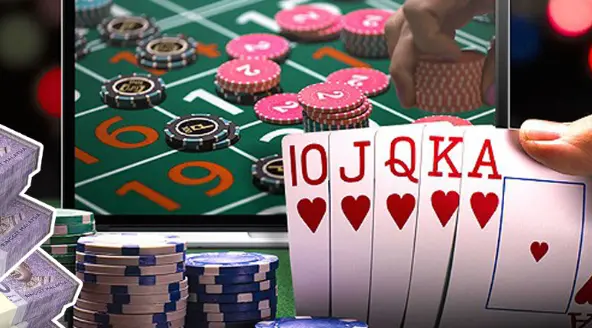
This is not a minor convenience feature. It is a structural bypass of the traditional payment surveillance grid. The casino receives value confirmation from the Paysafecard clearinghouse, credits your player account, and the entire event settles in under 30 seconds. No bank statement line item. No merchant category code flagged as gambling. No waiting for a fraud department to review a suspicious cross-border charge. 🎰
The Prepaid Firewall: Why Your Bank Never Sees the Bet
The technical mechanism is straightforward but brutally effective. You purchase a Paysafecard voucher at any authorized retailer — gas stations, convenience stores, kiosks. The voucher carries a fixed denomination: 10, 25, 50, 100, or whatever ceiling the regional issuer supports. That physical or digital receipt contains a PIN. When you enter that PIN into the casino cashier interface, the platform validates it against the issuer's database and converts it to real balance.
Your bank sees a retail purchase. The casino sees a confirmed prepaid credit. The two never intersect. For players who understand how financial surveillance operates, this is the closest thing to a casino deposit with Paysafecard that leaves zero permanent trace on your primary banking profile.

What kills most players is not the deposit itself. It is the withdrawal. Prepaid vouchers are not designed for outbound cash flow. You cannot withdraw winnings back to a Paysafecard PIN. The smart play is to deposit with the voucher, run your session, and then withdraw via a separate method — bank transfer, e-wallet, or crypto — that the casino has already verified for your account. This two-rail strategy keeps the deposit anonymous while still giving you a clean exit for profits.
Instant Settlement and the Hardware Reality
The settlement speed is where Paysafecard destroys traditional payment channels. ACH transfers crawl through batch processing windows. Card deposits can trigger 3D Secure challenges that stall for minutes. Wire transfers are a joke. But a prepaid voucher deposit is a one-way push transaction: the PIN either validates or it does not. There is no chargeback risk for the casino, which is precisely why they love it and why they credit your balance instantly.
From the operator's perspective, the absence of chargeback liability means lower processing overhead. That savings occasionally translates into deposit bonus eligibility. Not always, but frequently enough that checking the cashier's bonus terms before selecting Paysafecard is worth 30 seconds of your time. Some platforms exclude prepaid methods from welcome offers. Others treat them identically to e-wallets. The variance is purely operator policy, not a technical limitation.
Regional Availability and Denominations
Paysafecard operates across more than 40 countries, but the voucher denominations and retail distribution networks vary wildly by jurisdiction. In Germany and Austria, you can walk into any Tabak shop and buy a 50-euro voucher without conversation. In the UK, the retail network is thinner but still functional. In the US, availability is fragmented — state-level gambling regulations create a patchwork that some issuers simply avoid. 💳
The key technical constraint is currency matching. If your casino account is denominated in USD and your voucher is in EUR, the platform will apply a conversion spread that eats into your deposit value. Always buy the voucher in the same currency as your casino balance. This is not optional advice. It is arithmetic.
Security Architecture and the MyPaysafecard Layer
The raw PIN system works, but it has a vulnerability: once the voucher is used, the remaining balance is stranded unless you have a mechanism to consolidate. That is where the MyPaysafecard account comes in. By registering your vouchers into a single digital wallet, you can merge partial balances, track transaction history, and execute deposits without re-entering PINs every time.
The trade-off is identity. A fully anonymous voucher deposit requires no registration. A MyPaysafecard account requires email verification and, in some regions, phone confirmation. For players who prioritize absolute privacy, the unregistered voucher is the superior instrument. For players who want convenience and balance consolidation, the registered account is the practical choice. Neither is wrong. They serve different threat models.
Transaction Limits and the Velocity Problem
Every Paysafecard voucher carries a maximum value determined by the issuing country's regulator. In most European markets, the ceiling per voucher sits between 100 and 250 euros. Monthly transaction limits for unverified accounts typically cap at 1,000 to 2,500 euros. If you are a high-volume player, this creates a velocity problem: you need multiple vouchers, multiple PIN entries, and possibly multiple retail trips.
The workaround is straightforward. Registered MyPaysafecard accounts with completed verification tiers unlock higher monthly ceilings. Some issuers allow limits up to 10,000 euros per month for fully verified users. The catch is that verification requires submitting identity documents — which defeats the anonymity advantage. There is no free lunch in prepaid gambling. You either accept lower limits with full privacy, or you trade some anonymity for higher throughput.
The optimal configuration for most players is a hybrid: use unregistered vouchers for deposits under 500 euros where anonymity matters most, and maintain a verified account for larger sessions where the limit ceiling would otherwise block your action. This is not theory. This is how experienced prepaid players actually structure their cashier activity.